Monday, August 26, 2013

Vodafone Launch LTE Category 4 Stick

Vodafone offers LTE network now speeds up to 150 megabits per second (LTE Category 4). The speeds are initially available in the cities of Dusseldorf, Munich, Dortmund and Dresden, but are offered in the coming weeks in other cities. It is important to note that the 150 Mbit/s can be achieved only through LTE2600, in the well-developed network LTE800 only about 50 Mbit/s are possible. The smartphone tariffs and data tariff through Vodafone Mobile Internet Flat 50.0 can use the higher speed at no extra charge.  

The hardware for Vodafone is from Chinese manufacturer Huawei. As the first smartphone with LTE Category 4 is the Huawei Ascend P2 in the Vodafone shops, the first USB surf stick with LTE Category 4 is the Vodafone K5150H, which is also manufactured by Huawei. Might come in the next few weeks to other smart phones and modems, it is speculated, that the iPhone 5S (or whatever it is called) already support LTE Category 4.

Many of the customers may of course ask the meaning of 150 Mbit/s whom you look at the availability and the rates. My opinion: on the one hand, it is for Vodafone a great marketing tool for some users, it is certainly important to be able, at least theoretically reach 150 Mbit/s. On the other hand, the total capacity will be increased so that more people get good data rates simultaneously. And since I see the true sense: in places where currently LTE2600 is used, is expected anyway with a heavy load of networks.  

In the coming days and weeks, the Huawei E3276 4G LTE Category 4 Surfstick will come available, and we will take a few tests on the Vodafone 4G network, so that data rates are achievable in reality. And we will have a clear review about the 4G LTE Category 4 network from Vodafone.

Thursday, August 15, 2013

ZTE MF822 4G Modem VS ZTE MF823 4G Aircard

Since more and more people are using 4G network for their home or office, they improve the communication efficiency through high network connection speed. As one of the important telecom equipment sipplier, ZTE had releases many 4G Aircards for various operators. And more and more people know ZTE and ZTE 4G modems.    

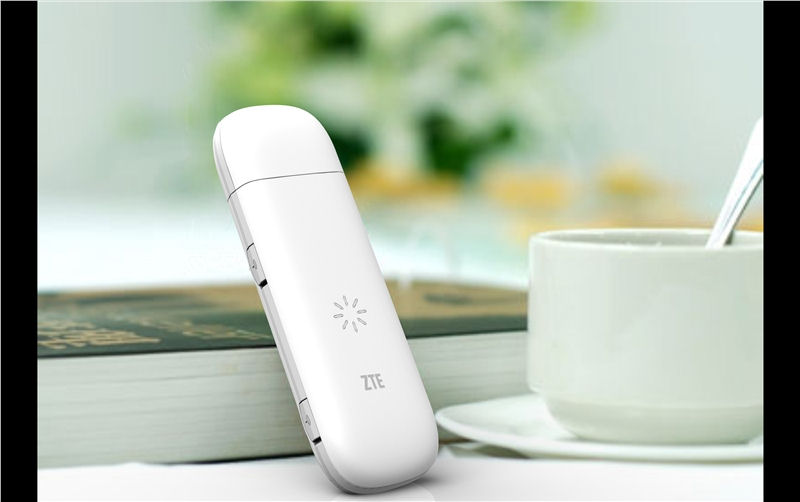
ZTE MF822 and MF823 are two of the hot 4G dongles. ZTE MF823 is the world's slimmest 4G USB dongle. Due to the compacity requirement, the inner part of a 4G modem usually contains more contents so as to fulfill more functions and high demand for network. This feature makes 4G dongle in bigger body than 3G modems. ZTE optimized this feature and let MF823 in slim size, actually, some predecessor model of ZTE MF823 is also very big, many users feedback they don't like the big body..


ZTE MF823 4G USB Stick is now available for O2 contract, the O2 LTE USB 4G could support 4G LTE FDD bands 3/7/8/20 (800/900/1800/2600MHz), which is for Germany 4G network. However, the unlocked ZTE MF823 would in other European countries, such France, Portugal, UK, Switzerland, Netherlands and Finland. Most of the 4G network frequency bands are similar, which makes the roam of ZTE MF823 come true. What's more, ZTE Mf823 could work with most 4G operators in Asia and Middle East.    

By the way, unlike the first generation 4G dongle from ZTE, MF823 is in compact USB design, the USB can't rotate. The other model ZTE MF822 is one special one, it's a 4G USB Modem for North America. It could support 4G LTE frequency band 4 and band 7 (1700/2100/2600MHz), which is mostly deployed in Canada and USA. ZTE MF822 is already available for Canada operator "Rogers". To work with Rogers, the FCC certificate is necessary for the device. As we know, ZTE MF822 is the only model that combines 4G band 4 and band 7. So unlocked ZTE MF822 could work in Canada and also roam to work with some operators in USA. Frankly speaking, ZTE MF822 could also work with the operators in Asia and Europe who provider the LTE band 7. So MF822 is also powerful in the compatibility with global operators.


ZTE MF823 and MF822 are not brother models, but they are both LTE category 3 USB modem. They both support the peak download speed up to 100Mbps and upload speed up to 50Mbps. The speeds are amazing for the user to trip or surf outdoor, if you want unlock MF823 or MF822, welcome to visit http://www.4gltemall.com/4g-usb-modem/zte-4g-lte-modem.html .    

Monday, August 12, 2013

Unlocked Telstra USB 4G (ZTE MF821) 4G USB Modem Review

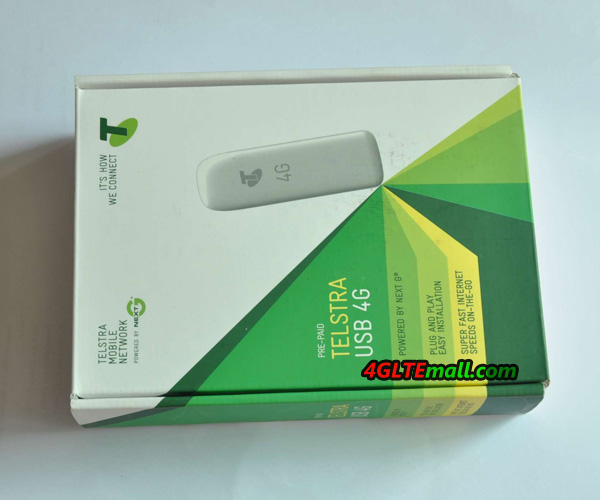
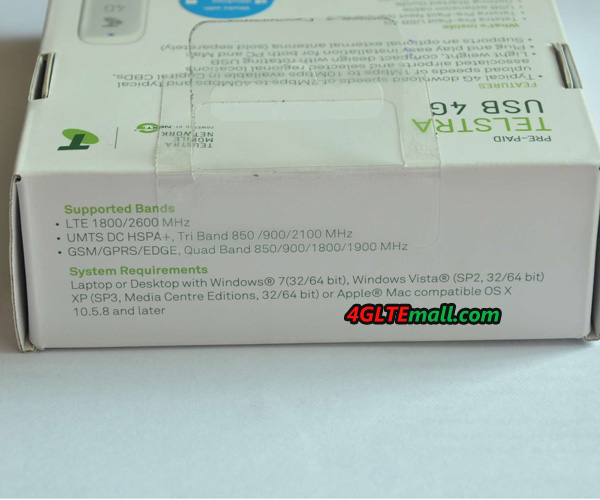
Today, we get a new 4G LTE USB datacard, the 4G aircard model number is ZTE MF821. The 4G modem is packed well in a box, there is the operator's logo "Telstra USB 4G" on the front box, and the information is telling user this 4G USB modem. The ZTE MF821 is already unlocked by our group, so users don’t need worry about the lock issue.  


At the side of the box, we can see that LTE Frequency bands that ZTE MF821 could work with. The specification indicates MF821 could support FDD LTE 1800/2600Mhz, but per our information from the manufacturer ZTE, the modem MF821 4G aircard could support band 1, band 3 and band 7(1800/2100/2600MHz), we suppose this band is not activated because the operator Telstra is not providing the LTE band 1 (2100MHz).  


And the 3G DC-HSPA+ Tri-band (850/1900/2100) is backward compatible. Under the 4G LTE network, user could enjoy high speed up to 10Mbps. Even on 3G network, ZTE MF821 could reach speed to 42Mbps.  


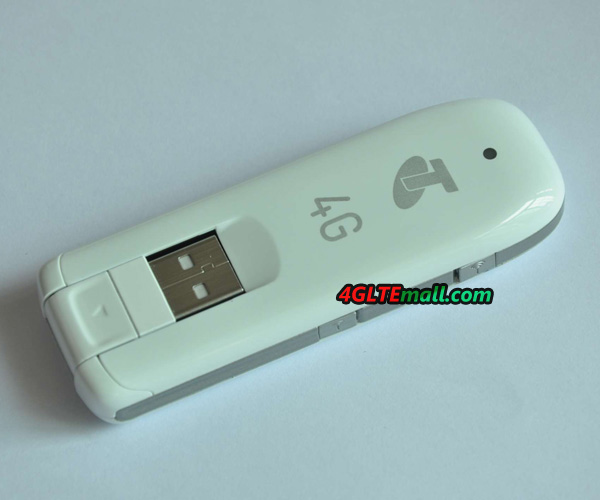
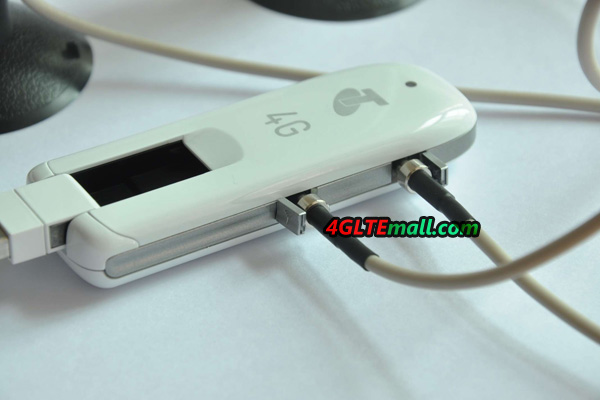
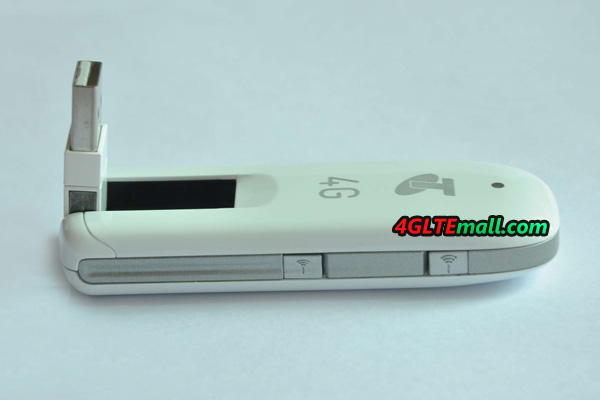
Open the package, we can see the 4G dongle ZTE MF821. There is a logo of "4G" and "T", which means Telstra 4G. On the side, we can see two small icon of signal; they are two hidden connectors for external antennas. This feature is important for 4G data transmission, and it lets MF821 different from MF820 or MF820T. On the other side, there is no slot.  


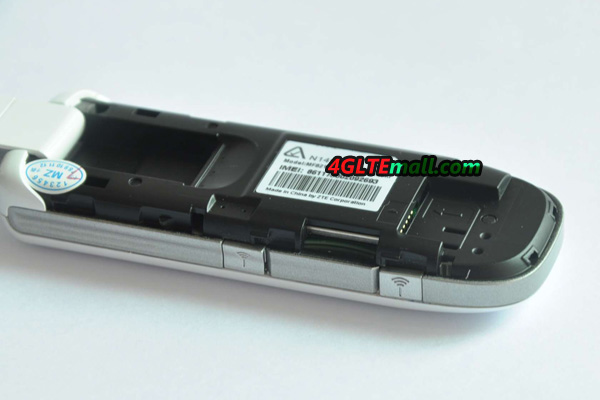
The USB of ZTE MF821 is rotatable for 180 degree, user could hide the USB in the body of MF821. User need open the back over and find the SIM card slot. On the SIM slot, we can see the model number, IMEI number, place of origin (Made in China) and manufacturer ZTE Corporation. And close to the SIM card slot, there is a slot for MicroSD memory card. The MF821 could support maximum 32GB SD memory card.  


Comparing with other ZTE 4G Aircard, such MF880 or MF820D, ZTE MF821 is really very slim, the size of MF821 is as big as a 3G datacard.  So if a user prefer a small size USB dongle, ZTE MF821 is a good option and without any contract. But before purchase, user should concern about the 4G frequency band  compatibility, if you want a 4G Aircard for FDD band 20 (800MHz) or TDD band 38 (2300MHz), or any other bands that are not same as MF821 supporting, you may need check other model and choose the right one. You can check here more 4G Aircard for various LTE frequency bands:   http://www.4gltemall.com/ue-by-spectrum.html             

Saturday, August 10, 2013

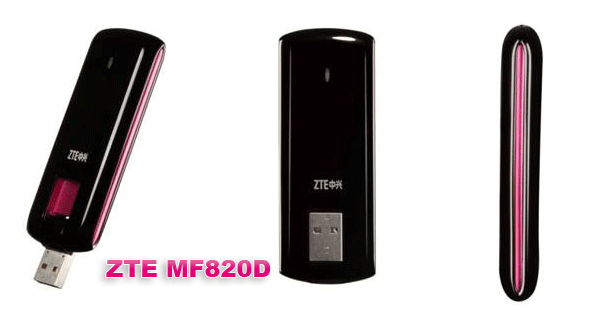
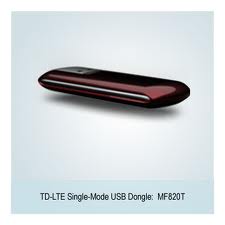
ZTE MF820T TD-LTE Modem VS ZTE MF820D FDD-LTE Modem

Most of ZTE 4G modems looks the same, and the first generation of ZTE 4G Dongles are all using same appearance design, so it becomes much harder to identify them. No wonder what the difference between them is. We open the blog especially for clear out the similar 4G devices and let users know more about the details of the LTE modems they had used.    

ZTE MF820T and ZTE MF820D are two similar 4G LTE sticks for first generation ZTE 4G USB modems. Most of the modems, appearance similar or not, their difference are mainly on the core part, that is the platform chipset, which decides what LTE frequency bands that could support and where they can be used.


ZTE MF820T is based on Qualcomm MDM9600 chipset, it could work TD-LTE bands 38 and band 40 (2300/2600MHz). ZTE MF820D is based on Qualcomm MDM9200 chipset, it would support FDD LTE band 3, 7 and 20 (800/1800/2600MHz). Unlike ZTE MF880, they can only work on single TD-LTE network or FDD network, MF880 would support LTE dual-mode (TDD&FDD).    

As the typical features of ZTE first generation 4G USB stick, there is no external antenna connector in the dongle, so the LTE MIMO transmission can't make true. But there is built-in antenna which is still reliable to connect network in high speed.


What's more, there is no MicroSD card slot available in MF820T and MF820D. We suppose they are not for single user, it's more like designed for large data in project test or other research terms. However, the 4G aircard may be more reliable when there is no SD card sharing function. According to the experience in 3G modems, SD card usually causes the application of wireless dongle in trouble.    

And we can see the big body of the 4G modem ZTE MF820D and MF820T is not user-friendly. It's almost twice bigger than ZTE 3G modems. We hope there will be some smarter or slimmer models available in near future, and this will not only need the improvement in the design for inner part, but also the function more powerful.  

Thursday, June 20, 2013

Band 4 AWS(1700/2100MHz) – Operators and UEs

Band 4 (AWS 1700/2100MHz) is used in the United States, Canada, Mexico and Chile. It replaces some of the spectrum formerly allocated to Multipoint Multichannel Distribution Service (MMDS), sometimes referred to as Wireless Cable, which existed from 2150 to 2162 MHz. The AWS band uses microwave frequencies in two segments: from 1710 to 1755 MHz for uplink, and from 2110 to 2155 MHz for downlink. The service is intended to be used by mobile devices such as wireless phones for mobile data, video, and messaging services.

Now, AWS has become "an essential LTE band for LTE roaming support in North America and Latin America, advancing AWS as a solid candidate for one of the essential seven or eight LTE bands deemed critical for global roaming LTE devices and services," said the Current Analysis report.

List of countries / operators with LTE AWS networks or plans:  


1.      Argentina

2.      Canada , Bell , 2012.10

3.      Canada , Rogers , 2012.10

4.      Canada , Telus  , 2012.10

5.      Chili

6.      Colombia

7.      Mexico, Telcel, 2012.11

8.      Peru

9.      Uruguay

10.   USA, AT&T , 2012.10

11.   USA, MetroPCS (USA)

12.   USA, T-Mobile (USA)

13.   USA, Verizon Wireless (USA)      


Below is the list UEs for 4G LTE FDD Band 4 (AWS 1700/2100MHz)    

Smartphones  

1.      Apple iPhone 5 A1428, 2012.09

2.      HTC One XL, 2012.08

3.      HTC Windows Phone 8, 2012.10

4.      Motorola Droid Razr HD, 2012.09

5.      Motorola Droid Razr MAXX HD, 2012.09

6.      Nokia Lumia 920.2, 2012.09

7.      Pantech Flex, 2012.09

8.      ZTE Anthem 4G, 2012.09      


Fixed Routers  

1.      Netgear MBR1516, b4, 2012.10

2.      ZyXEL LTE5121, b4, b17, 2012.09      


USB dongles/Modems/Surfstick  

  1. 4G LTE Novatel Wireless U679 Turbo Stick / Ovation MC679
  2. HUAWEI E397bu-501
  3. Sierra Wireless Aircard 330U
  4. Sierra Wireless Aircard 313U
  5. LG Adrenaline AD600 4G Modem
  6. BandLuxe C505 4G USB modem

Tablets  

  1. Apple iPad mini (GSM, b4/17), 2012.10


Modules    

1.      Novatel E371,  b17 700 / b4 AWS, approved f.e. by AT&T 2012.10

2.      Sierra Wireless EM7700, b17 700 / b4 AWS, approved f.e. by AT&T 2012.10

3.      Sierra Wireless MC7700, b17 700 / b4 AWS, approved f.e. by AT&T 2012.10      


MiFi Hotspot/Mobile 4G Router    

  1. T-Mobile Sonic 2.0 Mobile HotSpot LTE, 2013.03
  2. Sierra Wireless 754S 4G LTE Mobile Hotspot
  3. Sierra Wireless 770s 4G LTE Mobile Hotspot
  4. Sierra Wireless 763s 4G LTE Mobile Hotspot
  5. Bandluxe PR55 4G Pocket Router


Wednesday, June 5, 2013

Unlocked Rogers LTE Aircard 330U from Sierra Wireless General Review

You may had seen a 4G LTE Modem which support 4G Band 4(1700/2100MHz) or 4G LTE Surfstick which is for 4G FDD Band 7 (2600MHz), but do you know any 4G USB modem that could support them together?

Today, we will recommend a 4G Aircard which could support the 4G LTE FDD Band 4 and Band 7 simultaneously. The model number is Rogers AirCard 330u LTE Rocket Stick. This is the successor of Sierra Wireless AirCard 320u. They are both from Sierra Wireless. The difference between them is that Aircard 330U is capable of LTE FDD Band 7 and Band 4, but AirCard 320U could support band 3 and band 7.


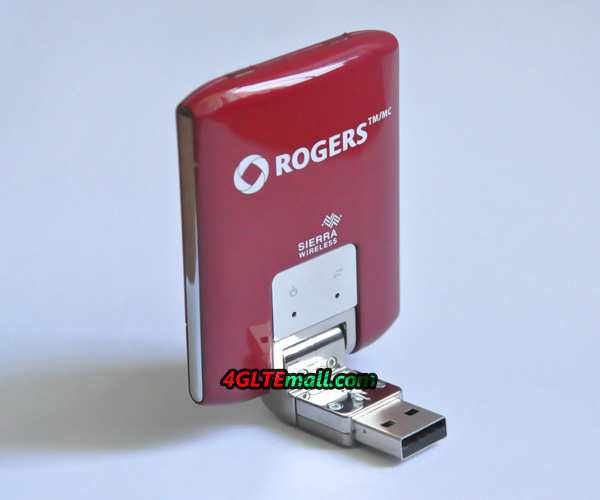
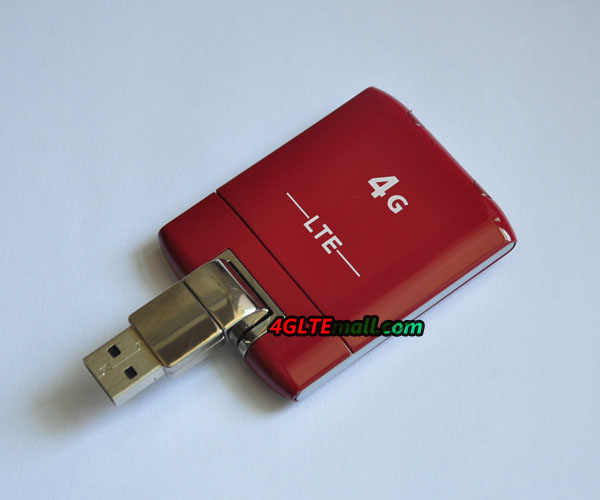
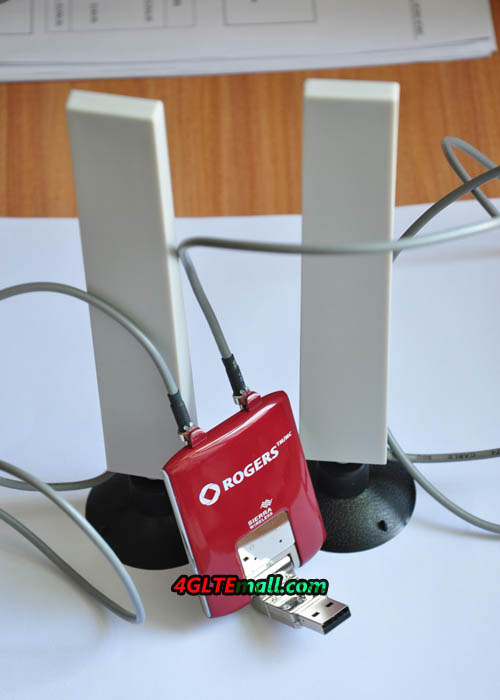
The Rogers LTE AirCard 330u looks cool in red color, but it's unlocked to Rogers network. It means the AirCard 330u could support any operators' SIM card.     Just like the brother model AirCard 320u, 330u is in square shape and it's bigger than AirCard 306 or 308. The USB could rotate for 180 degree. On the front, There is logo of Rogers and one the back, there is printer of "4G LTE" on it. Below the "4G LTE", we can see the icon of the manufacturer "Sierra Wireless" logo, and the indicator of data transmission.  


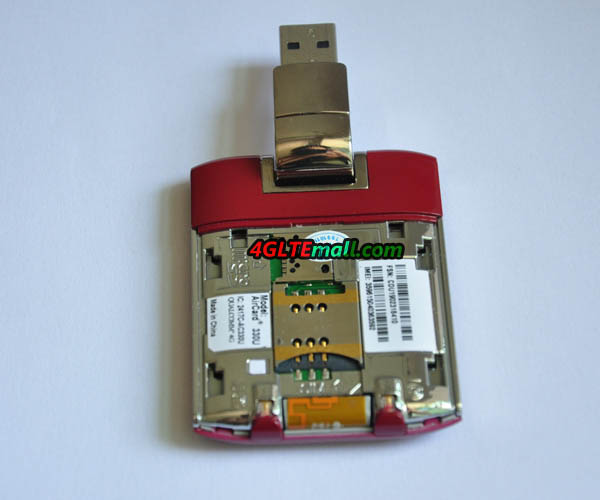
Open the back cover, we could see there is a stick indicating the model number "AirCard 330u" and the IMEI number of the 330u. Belie the stick, we can see the SIM card slot and MircroSD card slot. At the side of the SIM card slot, there are two external antenna connectors for MIMO. They are covered by two small cap, user need open the cap and then connect the external antenna.


The connector of the external antenna is TS-9 model, so if you want buy external antenna for AirCard, you could check here: http://www.4gltemall.com/external-antenna-for-huawei-4g-lte-usb-modem.html  

the 4G Antenna is also usable for Aircard 320U and 313U. 


After plug the two external antennas, the data link speed would improve obviously. The AirCard 330u is apt for North America 4G LTE networks band 13 and band 7, so it could also roam in Europe or Asia. In conclusion, AirCard is a cool USB modem that will be a good gadget for 4G networks.

Tuesday, May 21, 2013

TDD Band 40 (2300MHz) and LTE UEs for Band 40

The 2300MHz band has already been defined as a 3GPP eUTRAN band (band 40) based on a Time Division Duplex (TDD) scheme. First significant rollouts have already started in India (Bharti Airtel operator) and in Saudi Arabia (STC operator), with several others following by 2013.    

According to the Global Suppliers Association (GSA), 43 commercial devices supporting the 2300MHz band are now available on the market, including multi-band and multi-frequency Customer Premises Equipment (CPE), dongles and portable hotspots, while tablets and smartphones will be commercially available by the end of 2012. Even the early European adopters will be able to rely on the economies of scale that are now being established in other regions thanks to the global identification of the 2300MHz band by the International Telecommunication Union (ITU-R) for the IMT family of technologies.    

LTE-TDD is now gaining market traction in all regions as it is commonly considered in the evolution path of any wireless cellular TDD technology (TD-SCDMA, UTRA-TDD and WiMAX™). LTE-TDD is an integral part of the 3GPP standards, sharing significant common properties with LTE-FDD and offering comparable performance characteristics with similar high-spectral efficiency. Globally, 80 LTE networks were launched in 38 countries between December 2009 and June 2012. LTE-TDD is now entering maturity stage: 33 trial and 23 commercial LTE-TDD networks launched in Brazil, India, Japan, Poland, the Russian Federation and Saudi Arabia by April 2012; and several new rollouts will take place in 2012 also involving the USA and all the BRIC countries (Brazil, Russia, India and China). All major network equipment manufacturers stressed the importance of LTE-TDD and have already launched their LTE-TDD solutions. LTE-TDD will reach economies of scale comparable with LTE-FDD in the longer term. With its large spectrum availability (up to 100MHz in the lowest available TDD band in Europe), the 2300MHz band will play a major role within the European ‘TDD bands’ in the short term.     Growing support from global industry for the 2300MHz band is increasingly evident; in March DIGITALEUROPE clearly stated its position in favour of rapid availability of 2300MHz harmonised spectrum across Europe. From an early stage, the European 2300MHz market will be able to leverage economies of scale from global TDD consolidation, enabled by the ITU-R global allocation, and by the growing availability of spectrum, as well as the arrival of suitable end-user devices.    

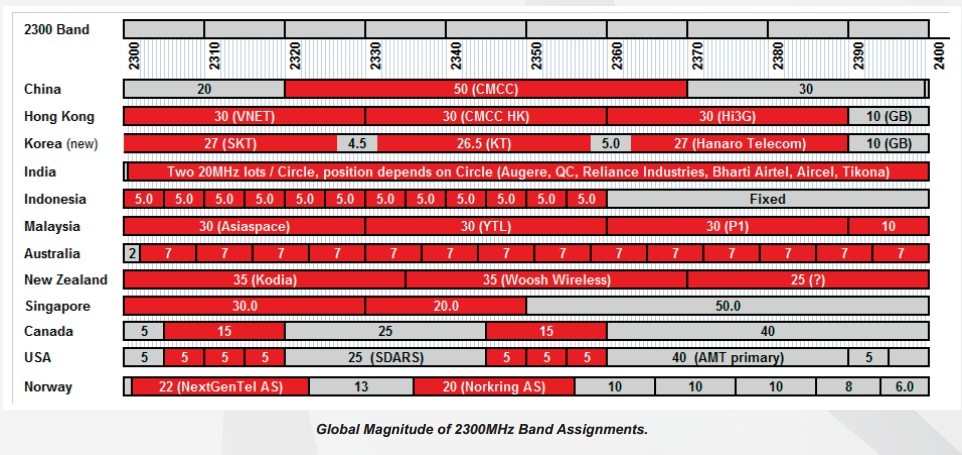
The following diagram provides information on allocations and assignments among key 2300MHz markets: band 40 2300mhz spectrum assignments          

Australia:

In order to gain access to the 2300MHz spectrum, Australian operator Optus is soon expected to complete its acquisition of another Australian operator, Vividwireless. Once confirmed by local regulatory authorities, Optus will be able to rely on almost all the 98MHz portion of spectrum in the Australian 2300MHz band.  

China:

The 2300MHz band is allocated to the Ministry of Information Technology (IMT) in China. China Mobile owns 50MHz in the 2300MHz band which can be used for indoor services at this time (the band is currently used by radiolocation services). China Mobile, having identified LTE-TDD technology as the long-term evolution of TD-SCDMA, is expected to increase investments in the near future. Additionally China Mobile is currently undertaking a large-scale LTE-TDD trial involving the 1900MHz, the 2300MHz and the 2600MHz TDD bands. Some 1000 eNBs have been rolled out in six cities in the first phase (Proof of Concept, completed in September 2011), 20,000 base stations and multimode user equipment tests are being performed in the second phase (R&D technical experiment and scaled trial) which will expand to nine cities and will end by December 2012. China Mobile plans to gradually upgrade 200,000 TD-SCDMA base stations to LTE-TDD by 2013.  

India:

In June 2010, each of six operators acquired one 20MHz license, with different geographic extensions, at a total cost of $US5.2 billion. Reliance Industries is the only operator with pan-Indian coverage while Bharti Airtel was the first operator to launch LTETDD commercial services in India in April 2012, starting with Mumbai, Delhi, Kolkata and Bangalore. Bharti Airtel has recently signed an agreement for the acquisition of Qualcomm AP’s BWA spectrum by 2014.  

Saudi Arabia:

STC commercially launched its LTE-TDD service in September 2011. This is the biggest LTE-TDD 2300MHz network in the Middle East. By May 2012, STC had already upgraded 1500 base stations serving 38 cities and is targeting 65% population coverage by end-2012. In parallel, competitor Mobily has also launched its 2600MHz LTE-TDD network.

Denmark:

In May 2011, a public consultation document entitled “A strategy to find an extra 600MHz for broadband” by the Danish regulator NTIA proposed the availability of the 2300MHz spectrum band by 2015.  


Ireland:


In October 2009 ComReg carried out a public consultation on “Release of Spectrum in the 2300-2400MHz band”. In its April 2011 consultation, “Review of the Period 2008 – 2010 & Proposed Strategy for Managing the Radio Spectrum: 2011 – 2013’ ComReg recognised the “great potential [of the 2300MHz band] to enhance competition and capacity for mobile broadband within Ireland”, once the ECC harmonisation work has been completed. According to the recently closed public consultation on its “Draft Strategy Statement 2012 – 2014“, ComReg will develop a new consultation “on a future release of the 2.3GHz band” which will also include economic analysis of the type of competitive award, fees and license conditions.  


Sweden:

PTS, the Swedish regulator, is considering the 2300MHz band in its roadmap for the release of more than 500MHz “new” spectrum in Sweden. PTS has been planning to release 2300MHz band for some time. Depending on market demand, spectrum could be auctioned starting from 2013. A first public consultation “regarding planned radio use in the 2.3GHz band” was held in November 2010. A more recent consultation addressing technical issues related to the 2300MHz band (e.g. coexistence matters, band plan, etc.) was closed in February 2012.  


UK:

The 2300MHz band (2310-2390 MHz) is considered as a “prioritised band for release” in the spectrum strategy document19 issued by the Department for Culture, Media and Sport in March 2011, which sets the target of releasing 500MHz below 5GHz from the public sector by 2020.  


LTE UEs for Band 40 (TDD 2300-2400MHz, 100MHz)


LTE CPE

1.    Asiatelco ALR-W190, indoor, b40, b38 ..2012.09..

2.    Asiatelco ALR-W191, indoor, b40 ..2012.09..

3.    Huawei B222s-40, outdoor ..2012.06..

4.    Huawei B593s-82, indoor ..2012.09..

5.    Netcomm 4GT101W-01, indoor ..2012.08.. tbc

6.    Netcomm 4GT101W-04, indoor ..2012.08.. tbc

7.    Nokia Siemens Networks CPE outdoor 7210, 2011.10

8.    Nokia Siemens Network CPE indoor 7212, 2011.10

9.   Huawei B593s-58

LTE Dongles

1.    Asiatelco ALT-C160, ..2012.09..

2.    Huawei E392u-92, ..2012.06..

3.    ZTE MF820S2 ..2012.09..

4.   Huawei E398s-81  2012.08

5.   BandLuxe C508

Mobile hot-spots

1.    Huawei E589u Mi-Fi ..2012.06..

2.    Modacom URoad-LTE ..2013.02..

3.    ZTE MF91S, 2012.08

.