Sunday, March 10, 2013

HUAWEI E8278 4G 150Mbps LTE Cat4 WiFi Dongle Review

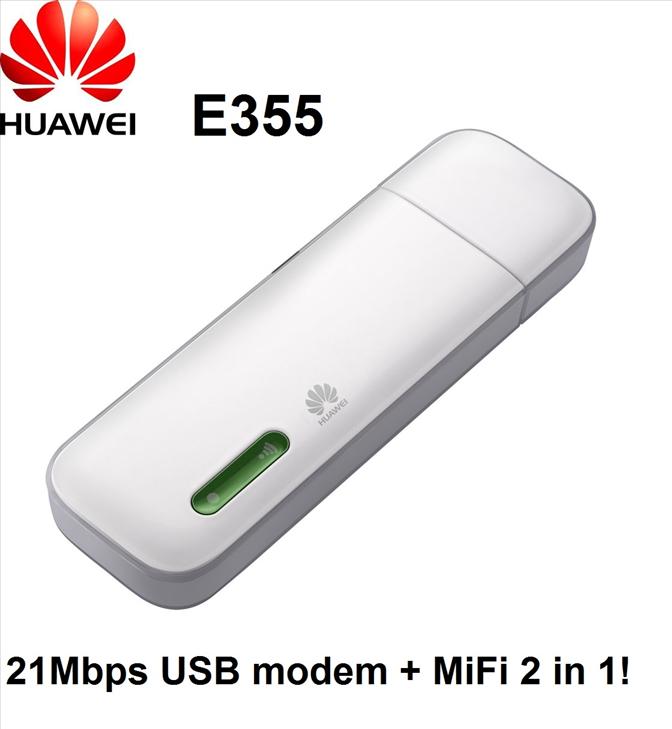
Before we start today topic, there is a question here: do you know Huawei E355 Mobile WiFi modem? If you are familiar with Huawei E355, you would know that Huawei E355 is a special model which falls in between USB dongle and Mobile WiFi, because even though it looks like a USB dongle, it can work like a WiFi router. After plug Huawei E355 to PC or with power adapter, up to 5 users could get connected to it and surf Internet. The peak data transmission rate is 21Mbps.


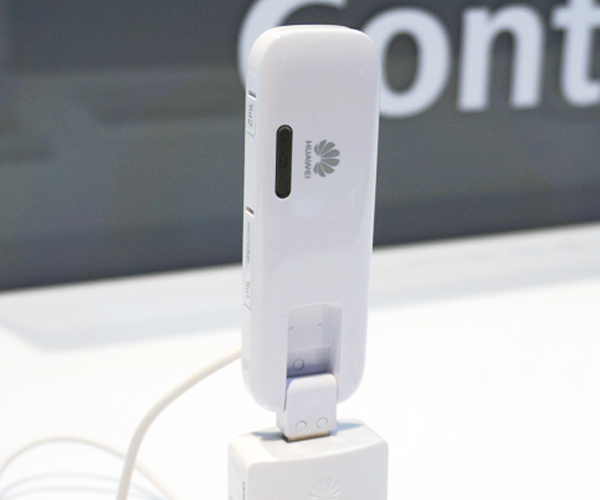
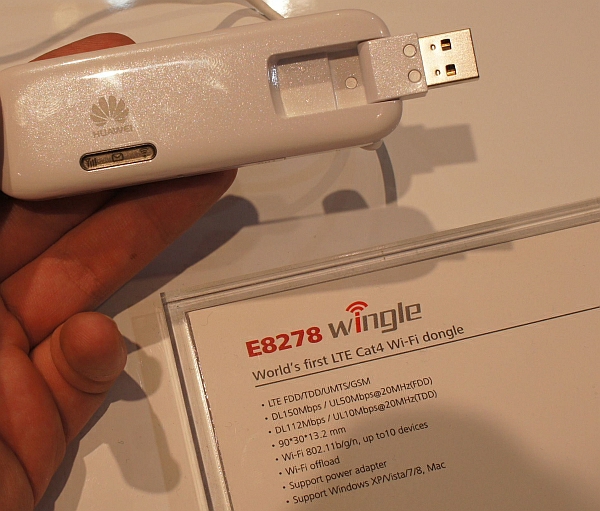
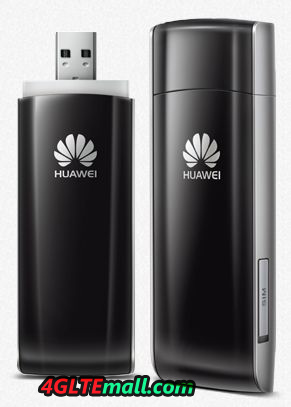
Similarly, there are new WiFi dongles released from Huawei to support LTE cat4 150mbps download speed. In MWC 2013, Huawei Wingle E8278 LTE Cat4 WiFi dongle comes to our eyes. Huawei E8278 is the world's first LTE cat4 WiFi dongle; it could support 4G LTE FDD and TDD network at 20MHz. The maximum download speed could reach 150mbps and upload speed could reach 50mbps under 4G FDD network; with TDD network, the downlink and uplink speed are 112Mbps and 10Mbps.


With better function than Huawei E355, Huawei E8278 could connect up to 10 WiFi users. From this point, Huawei E8278 is a 4G mobile pocket WiFi without battery. So if with a mobile power charger, Huawei E8278 would become a real LTE cat4 Mobile WiFi.


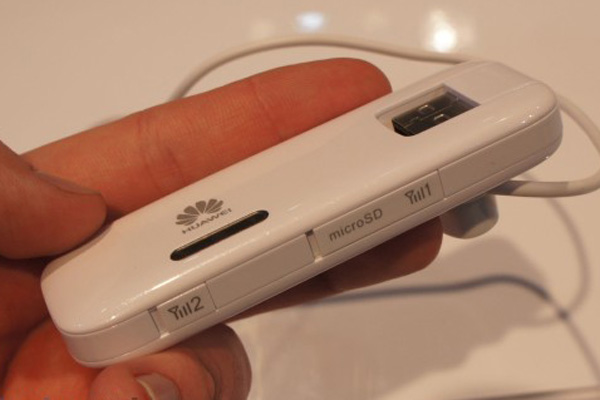
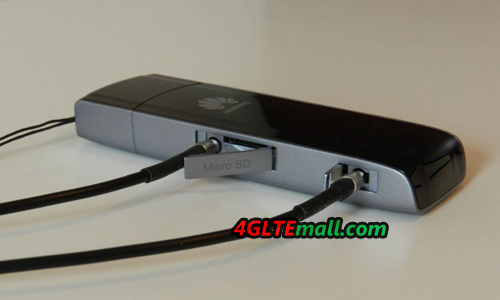
Different from Huawei E355, Huawei E8278 incorporates 2*2 MIMO, which would obviously improve the transmission speed. And there are two external antenna connectors. Besides the logo, there is indicators which telling the signal strength, message and WiFi status. The USB of HUAWEI E8278 is rotatable, the rotating USB could plug to a power adapter. After working with a power adapter, the HUAWEI E8278 would become a Mini mobile WiFi Hotspot, and the advantage is that the Wingle E8278 could keep working with the continuous power supply.


Except for SIM card slot, HUAWEI E8278 has a MicroSD card, the extended card capacity could reach 32GB. So the users connected with HUAWEI E8278 would share the files or documents in the SD card inserted in E8278.  

As the leader of LTE technology, HUAWEI is always bring amazing gadgets and fantastic experience to the user through the mobile terminals. These are all based on the advanced technology.  

Monday, March 4, 2013

Test Report of ZTE MF820D Web Stick on Sonera's 4G Network

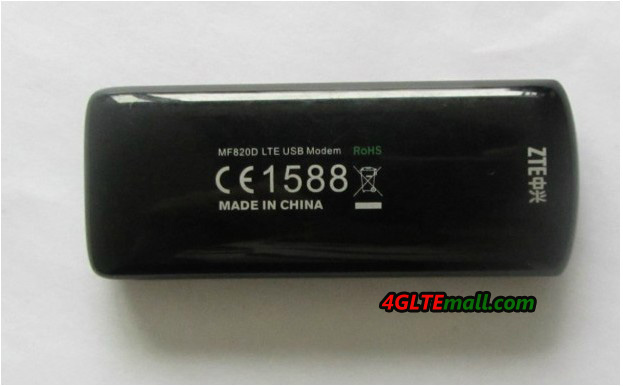
We received Sonera's 4G USB dongle ZTE MF820D some time ago, so we decided to take a closer look clear what 4G is capable of. The timing is better now because the network is better and unlike a year ago.
 
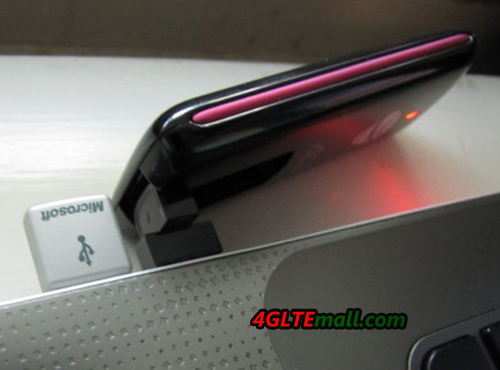
The stick ZTE MF820D itself is quite slim, and fortunately the drive manufacturer ZTE, has equipped the device with comfortable compact design, so stick may be a usable position also signed two USB port HP despite the fact that the second port is connected to a USB mouse receiver.

This is a big plus, for example, ZTE MF820D could be change to another side if there is no enough space between two USB ports. And it would be hard for HUAWEI E392 4G TDD FDD Compact Stick to do this.


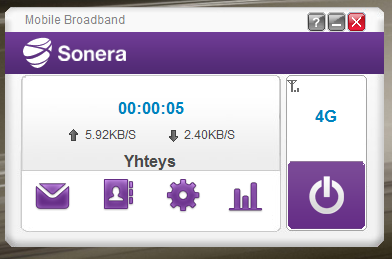
When the stick ZTE MF820D plug to PC, it starts Mobile Broadband application installation automatically. This is usual steps for all USB sticks, and it’s very nice that the installation is easy and seamless.


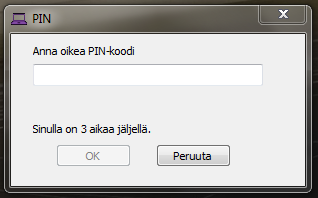
After starting the application asks for a PIN code, and this is required as long as the network is found. The delivery of a small error caused the PIN code window, and it shows that "You have 3 time remaining", which should of course be "You have 3 tries left."

 
Finding a network available seemed insanely slow, and before your stick found a network, it would take several minutes. This is a little bit disappointing, especially when we are trying the very fast networks.
After find the network, we started to test the speed of this 4G LTE stick. On the positive side were low pings, only HSPA+ network is usable, pings were about 40-50 ms range, which is enough to start playing in some degree of well.
 
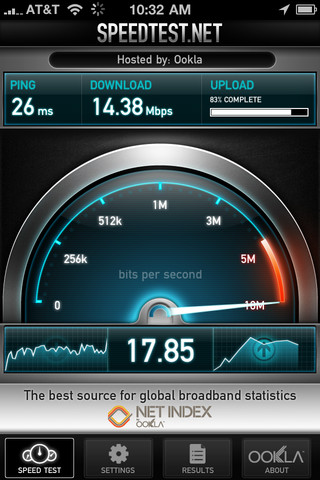
Our office is in connection with the auto setting up a HSPA+, but even in practice, the data was transferred to a single channel speeds of truly commendable and we received 10 test average of 14.38 Mbit /s and the top result of 17.85 Mbit/s for download. The upload speed of the average, is 2.1 Mbit/s and a peak speed of 2.5 Mbit/s.
 

Then we let the ZTE MF820D 4G stick increased to 4G, by setting the network to "only 4G", although the rates of test sites were weaker than HSPA+, respectively. It is only when we moved to the other side; we got to DC-HSDPA speeds. This is probably due to the fact that the test bench side of the base station Sonera does not support DC or LTE speeds and 4G speeds were forced into two within the post due to a low level. Only one side of the house, we got full use of poles, the speed increased commendable level. Speed tests average came now 30.68 Mbit/s, and the outside lane for outbound 19.01 Mbit/s with 30-40 ms level. Despite the fact that Sonera's map, the office is "true 4G" in the region, these speeds were still better than DC-HSPA+, so the "real" about 4G was not yet in sight. Thus, we had to leave the sea to fish farther, to find the right 4G network.


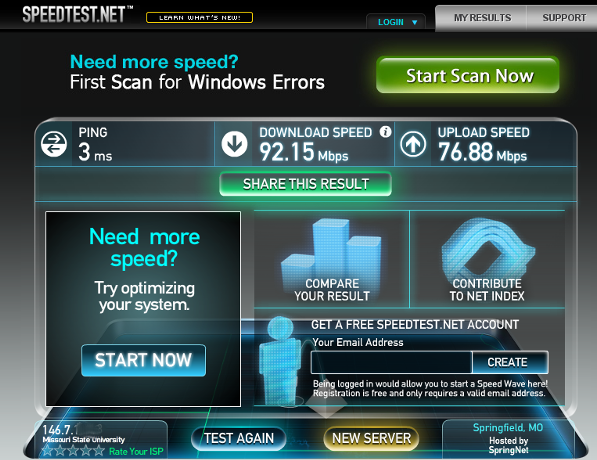
So we packed our drive and the laptop in the car and we went to a place the Finnish phone manufacturer's parking lot in the vicinity of which would certainly be an LTE base station. When we got to the scene, we immediately started to run speed tests and speeds up comfortably. Now, we average the resulting download 68.73mbps (peak 92.15 Mbit/s) and outgoing 33.25mbps (peak 35.54 Mbit/s). We also tested the speed by download a file from ftp.4glterouter.de, and this became the fastest machine 7.5 MB/s and 729 MB download size took a total of 3 minutes and 22 seconds, so the average speed is 3.3 MB/s.


While the 100 Mbit/s speed was missed, offering a 4G stick speed is found near the base, while maintaining strong coverage and interference. This is especially appreciated by those who transfer over the Internet to a lot of large files and multimedia. However, it’s usually hard to get the peak download speed to 100Mbit/s. At this early stage, I would see myself DC-HSPA+ to bring the best value for the money until the LTE network is properly spread in all population centers even though the DC-HSPA+ seems slow at the beginning, the speed can always upgrade by calling your operator's customer service.


As the results, it can be concluded that the 4G functionality of a 4G stick is strongly location-dependent and although the operator's coverage map promises 4G speeds, this does not yet mean that the broadband speeds that reached the desired level. Before you purchase, it’s better for you to take a stick to test first, which many operators offer. It is the easiest, then select the contract, or buy unlocked 4G dongles from www.4gltemall.com which certainly offers a sensible value for the money.
Friday, March 1, 2013

HUAWEI E392u-21 and E392u-92 4G LTE TDD USB Modem

As one of the top telecom equipment supplier, Huawei has been leading the trend of 4G network. To meet the demand for network upgrade, many 4G LTE modems are released with new LTE technology. TDD, as the one of the two most popular LTE technologies, is widely adapted for 4G network in many providers all over the world.     Huawei E392u-21 and E392u-92 are born to support TDD networks. Even though there are many variants for Huawei E392 or Huawei E397, Huawei E392u-21 and E392u-92 should be the most popular two models, because HUAWEI E392u-21 and E392u-92 both support 4G TDD band 2600Mhz, what’s more, HUAWEI E392u-92 supports TDD 2300MHz. What’s more, HUAWEI E392u-21 also supports 4G FDD 2600MHz.     Actually, the 4G Spectrum TDD 2300/2600MHz and FDD 2600MHz are the most popular bands which are commonly deployed and launched to commercial. So the difference between the two 4G LTE dongles is the 4G Frequency band supported. Below are the details of 4G Frequency they could support:   HUAWEI E392u-92: 4G LTE bands: TDD 2300/2600 Mhz 3G UMTS: 900/2100Mhz HUAWEI E392u-21: 4G LTE Bands: FDD 2600MHz/ TDD 2600Mhz 3G UMTS: 900/2100Mhz   Unlike HUAWEI E392u-21, HUAWEI E392u-92 could only work on 4G LTE TDD network. Since then, HUAWEI E392u-21 may support high link speed than E392u-92. Under FDD network, HUAWEI E392u-21 could reach peak download data rate at 100Mbit/s and upload data rate up to 50Mbps. But the maximum speed for HUAWEI E392u-92 to download is 68Mbps while upload peak speed is 17Mbps. When working on TDD network, HUAWEI E392u-21 could also run at this speed.   HUAWEI E392u-92 is somewhat like ZTE MF820T, but it seems HUAWEI E392u-92 is better because E392u-92 works on multi-mode, 3G & 2G network are backward while ZTE MF820T is single mode for 4G LTE TDD 2300/2600MHz. And with external antenna connector, HUAWEI E392u-92 would get high data rate in practical with MIMO antenna.     With the same compact design, HUAWEI E392u-92 and E392u-12 both have 2 external pigtail connectors. With MIMO technology, the transmission rate for data would improve obviously whenever in laboratory or practical usage.   It’s a pity that HUAWEI E392u-21 couldn’t support 2300MHz, which let E392u-92 has its special features. They both work for 4G TDD network and both are good 4G dongles worthy to have if there is 4G TDD network available round you.  

ZTE MF880 4G LTE FDD TDD Modem Review

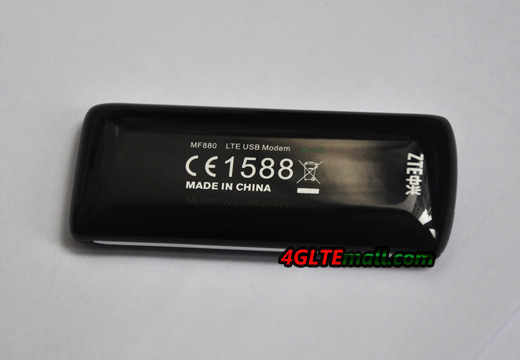
ZTE had release many 4G modems, such as ZTE MF820, MF820D, MF821, MF821D, MF820T, MF820s2 and MF880 etc.. And many 4G mobile WiFi are available now on the market. Today, we get the ZTE MF880 4G Modem and we will show the details for readers. Hope you will know more about this modem ZTE MF880.     Logo and USB Interface   The ZTE MF880 is with logo "3", which means it's customized by the UK operator "3".     Like ZTE MF820, ZTE MF880 also has a rotatable USB interface; the USB could be hidden in the body of the modem. And beside the logo, there is a small indicator in oval shape, which will help users to know more about the connection status.     Back   On the back, the model number MF880 is printed on this modem. With the model number, there is CE number, RoHS mark and below them is the IMEI number of this modem, which is on behalf of the modem's ID. The IMEI number is printed on the back cover, unlike ZTE MF820, whose IMEI number is on a extra stick. And it also show the original produce place “Made in China”. ZTE also print its brand with this mark.   Inner Part   Beside the indicator, there is a little cap to open the back cover of ZTE MF880. But you may take effort to open. At this point, the modem is not user-friendly. The cover is very tight. After opened the modem, you can find the SIM card at the side of the body. But there is no slot for memory card. And it’s a pity that it also doesn’t have even one external antenna connector. In 4G LTE technology, the MIMO connection is one of the most important features for high speed data transmission.     Network bands   According to the official files from ZTE, the ZTE MF880 4G LTE Modem could support 4G LTE TDD and FDD bands as follows:   * LTE FDD DD800/2600 MHz * LTE TDD 2300/2600MHz * 3G UMTS 900/2100MHz   So unlocked ZTE MF880 could support all the operators who had launched Band 20, band 7, band 40 or band 38. ZTE MF880 should be one of the LTE modems which could support TDD and FDD simultaneously. If you want to buy unlocked ZTE MF880, welcome to land www.4gltemall.com .

Tuesday, February 26, 2013

ZTE MF880 and MF820T 4G LTE TDD USB Modem

As one of the most important 4G vendors, ZTE has released many 4G LTE modems. ZTE MF820T and MF880 are two of the popular TDD models.  

Just like other 4G LTE modems from ZTE, ZTE MF880 and MF820T followed the same design as ZTE MF820 4G LTE FDD Surf stick. The modem body is a little bit larger than usual 3G USB stick. And taking them in hand, users can feel the weight is more than 3G modems.


What is a pity that both ZTE MF820T and MF880 don't have the connectors for external antenna. Perhaps at the big inning when engineer designed the mode, they didn't take this factor into their blueprint. As we can see, in the serials of ZTE MF820D, MF821, MF821D, MF820S2, MF820T, MF880, they all incorporates no antenna ports. As the key features of MIMO connection, we are afraid it may not be as good as the modems with MIMO antenna for data transmission.


ZTE MF820T and MF880 both work for 4G LTE TDD network, perhaps due to for different providers, they support different TDD frequency bands as below:    

ZTE MF820T 4G LTE TDD Single Mode USB Modem:

* Single mode LTE TDD 2300/2600MHz  

ZTE MF880 4G FDD TDD USB Modem:

* FDD 800/2600MHz

* TDD 2300/2600MHz

* DC-HSPA+/HSPA+/HSPA/UMTS 2100/900MHz

* EDGE/GPRS/GSM 850/900/1800/1900MHz


This should the key difference between ZTE MF820T and MF880. Per current information, ZTE MF880 had need presented to public under provider "3" from UK. And ZTE MF820T should be for China Mobile. What should focus is that ZTE MF880 could also support FDD LTE band 800/2600MHz. It means MF880 could switch between FDD and TDD networks, so ZTE MF880 is somewhat like a enhanced ZTE MF820T.      


Regarding the data transmission speed, they both support download speed at 68Mbps and upload at 17Mbps under TDD –LTE network. ZTE MF880 seems more powerful because when working at FDD network, the peak speed could reach to 100Mbps for downlink while uplink could reach 50Mbps.  


In conclusion, ZTE MF880 seems more powerful than ZTE MF820T, so if you want to want buy ZTE 4G LTE TDD USB Modems, welcome to www.4gltemall.com    

Thursday, February 21, 2013

Which 4G Modem is Good for TDD network?

More and more 4G networks are launched to commercial as time being, many users want to have their own mobile gadgets to experience faster surfing speed. However, there are so many 4G modems on the market now, which one is better? It's a good question. First, we should know some knowledge about 4G Network. LTE and WiMAX are two most popular 4G Network. Since LTE dominates the 4G trend. Today, we would introduce 4G modem for LTE network.  

As the most popular 4G network, LTE uses TDD and FDD technologies to transmit the data. Subsequently, there are 4G TDD modemand 4G FDD modem. They both have special advantages and weakness. This is not our topic today. Today we talk about the 4G modem for TDD network, i.e. 4G TDD Modems.  

TDD Frequencies Band & Spectrum

LTE BAND NUMBER    ALLOCATION (MHz)      Wideth of band(MHz)

33                                 1900 - 1920                              20

34                                 2010 - 2025                              15

35                                 1850 - 1910                              60

36                                 1930 - 1990                              60

37                                 1910 - 1930                              20

38                                  2570 - 2620                             50

39                                 1880 - 1920                             40

40                                 2300 - 2400                             100

41                                 2496 - 2690                             194

42                                 3400 - 3600                             200

43                                 3600 - 3800                              200

Below are the top TDD Modems that are good for 4G TDD networks:  

4G modems for band 38(2600MHz):

  1. Asiatelco ALT-C180 .
  2. Asiatelco ALT-C186
  3. Asiatelco ALT-C187
  4. Huawei E392-92
  5. ZTE MF820S2
  6. ZTE MF820T
  7. ZTE MF880
  8. HUAWEI E392u-21


4G modems for band 40(2300MHz): 

  1. Asiatelco ALT-C160,
  2. Huawei E392-92,
  3. ZTE MF820S2 .
  4. ZTE MF880
  5. ZTE MF820T

 So if you are hesitate on which TDD Modem to choose/buy, hope above information would help you make the decision. But since the TDD modems for rest bands are very few, we will make a summary next time about 4G LTE dongles.  

Tuesday, February 12, 2013

LTE Dongles, CPE and Modules for Band 38(2.5-2.6GHz)

Band 38 is one of the most popular bands for TD-LTE network, the running spectrum is 2570-2620 MHz, usually, people would like to say it band 26000MHz. And it’s 50MHz.

Below are the UE that could work for Band 38(TDD LTE 2600 MHz):

LTE CPE:

1.      Asiatelco ALR-W190, indoor, b38, b40.. 2012.09..

2.      Asiatelco ALR-W191, indoor, b38, ..2012.09..

3.      Nokia Siemens Networks CPE outdoor 7210, 2012.10

4.      Nokia Siemens Networks CPE indoor 7212, 2012.10

5.      Huawei B593s-82 indoor CPE ..2012.06..

6.      Huawei E593u-91, ..2012..

LTE Surfsticks/Modems/Dongles:

1.      Asiatelco ALT-C180 ..2012.09..

2.      Asiatelco ALT-C186 b38 and b41 ..2012.09..

3.      Asiatelco ALT-C187 b38 and b39 ..2012.09..

4.      Huawei E392-92 multiband ..2012.09..

5.      ZTE MF820S2 ..2012.09..

Modules:

  1. ZTE MF291 LTE modul, 2012.10,

Below are the operators worldwide for Band 38 (TDD 2600MHz):

Commercial systems:

1.      Brazil, Sky Brasil Servicos

2.      Japan, Softbank Mobile XGP/LTE

3.      Poland, Aero2

4.      Russia, MTS, 2012.09-.. 25 MHz, 2595-2620 MHz (Moscow and Moscow region only, to launch LTE network before Dec.29, 2013, the concession is valid until Dec.29, 2016)

5.      Saudi Arabia, Mobily

6.      Sweden, 3 Sweden

Planned:

1.      Austria, 3 Austria, tests 2012.09

2.      Austria, A1, from 2010.09.20

3.      Belgium, BUCD, 2012

4.      China, China Mobile, 2012.10

5.      Germany, E Plus, 2012.09

6.      Russia, Megafon, 25 MHz, 2570-2595 MHz (Moscow and Moscow region only)

7.      Spain, COTA, plan commercial launch Nov. 2012